8
Recurring
"All knowledge is but remembrance...
Therefore, our souls must have existed before we were born.
...and so each soul needs to make its way back when the body dies."
— Plato, Phaedo, 72e, 76d, 81a, c.370 BCE
Collaborations


According to Plato, death involves a soul/body separation whereby sense perception discontinues and knowledge is carried forth by the soul or psuchē. The Greek psuchē or psyche was seen to be that which animates living beings (such as breath, a vital force or an essence) and translates loosely as the 'soul' in the writings of Plato and Aristotle. For them the soul dwells in a body; knowledge in the soul; and life itself is a continuity of thought across incarnations. Here we recall several cosmologists and the thinking they developed over multiple lifetimes.
The Cosmologists
The ancient Hellenistic astronomers of the 3rd–2nd century BCE who re-established the heliocentric model of the solar system were reincarnations of yet more ancient Babylonian astronomers who had similarly reached such conclusions, whose names are lost to the historic record and need not concern us here; but we will show how they reappeared in recent times to again propound their theses and to lay the foundations for modern astronomy and astrophysics.
Many ancient Greek scholars visited Egypt or studied Babylonian texts as part of their mathematical training. According to astrophysicist Adam Hossein Fuller, "the Babylonians were fascinated by numbers and produced huge amounts of data using sophisticated arithmetical techniques in an attempt to predict the motions of heavenly bodies. While they viewed the cosmos in purely mathematical terms, the Greeks brought their mastery of geometry to bear on Babylonian methods to not just ask 'when?' but also 'why?' They were the first to pursue reasons for the motion of the sun, moon, and stars, making them the first to engage in what we would today recognise as science." (Aristarchus: The Copernicus of Antiquity, 20 December 2010)
We now look at some ancient and modern incarnations in pairs.


Aristarchus and Copernicus
Aristarchus (c.310 – c.230 BCE), an astronomer and mathematician from Samos, is widely celebrated as the ancient Copernicus, and indeed they were the same soul. (El Ochre, 21 June 2026) Aristarchus postulated the heliocentric model on a theoretical basis and was regarded by his contemporaries as the first to put the sun at the centre of the universe and then line up the planets in their proper order along circular orbits. His observations predate the invention of trigonometry and so underestimate the size and distance of the heavenly bodies. His calculations did however introduce a new sense of scale regarding the enormity of the sun and the vastness of the universe. He also proposed that the stars were other suns at great distances away.
Nicolaus Copernicus (1473 – 1543) studied the ancient Greek texts and, in his original drafts On the Revolutions of Celestial Spheres (1543), cited Aristarchus as an authority who had come to the same conclusion: Earth revolved around the Sun every year, spinning on its own axis each day. The citation was removed prior to publication, probably to dissociate Copernicus from Aristarchus' alleged impiety. For decades Copernicus had resisted publishing his theory, already complete by 1510, not wishing to risk the scorn "to which he would expose himself on account of the novelty and incomprehensibility of his theses." While Copernicus was devoutly Catholic and found support among Popes and Cardinals, resistance to his ideas came mainly from Protestants and Astronomers in Germany. We may well ask if the so-called Copernican model should be renamed the Aristarchian model?

Seleucus and Galileo
Aristarchus' model was championed by Seleucus of Seleucia (c.190 – c.150 BCE), a later astronomer and philosopher, who demonstrated its inherent correctness through reasoned argument. Seleucus also figured out that the tides were caused by the motion of the moon. He was later reincarnate as Galileo Galilei (1564 – 1642) who, in turn, championed the thesis of Copernicus and made more astronomical discoveries through his development of the telescope. His new insights included observations of the moon's textured surface (exploding the prevailing Aristotelian belief that the celestial bodies were perfectly smooth spheres). The landscape of the Moon, like that of the Earth, was covered by mountains and valleys (albeit he mistook the darker shaded areas for seas). He also observed some of the moons of Jupiter.
Moreover, Galileo debunked another Aristotelian fallacy that a heavy object falls faster than a lighter one, by dropping objects of different weights from the tower of Pisa to demonstrate that they all fall at the same speed — a phenomenon that would later be explained by Newton's theory of gravity.


Hypsicles and Kepler
Galileo's contemporary Johannes Kepler (1571 – 1630) went on to determine the elliptical orbits of the planets and establish the laws of planetary motion, laying the foundation for the monumental work of Newton (1643 – 1727) who reincarnated the soul of Galileo albeit with a different oversoul. Kepler was a brilliant mathematician and astrologer/astronomer, as he had been in his ancient incarnation as Hypsicles of Alexandria (190 – 120 BCE) who, like his contemporary Seleucus, advanced the heliocentric hypothesis of Aristarchus. Best known for having revived the Babylonian division of the zodiac into 360⁰ and for having mapped the rising times of the signs of the zodiac using arithmetical progressions, he made significant other contributions to geometry expanding on the work of Euclid.
Hipparchus and Tycho Brahe
Kepler relied heavily on the astronomical data and precise measurements obtained from his contemporary Tycho Brahe (1546 – 1601) the great Dane. As arguably the foremost observational astronomer of his time, Tycho recapitulated his prowess in his ancient incarnation as Hipparchus of Nicaea (c.190 – c.120 BCE) often acclaimed as the greatest astronomer of antiquity and the father of trigonometry. Among the many accomplishments attributed to him, he mapped the stellar heavens extensively and explained the precession of the equinoxes.
These examples serve as an introduction to illustrate that modern science has roots extending into the ancient incarnations of modern-day philosophers and theorists, a theme on which we will elaborate further.

Thales and Teilhard de Chardin
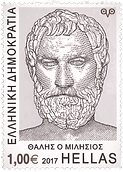
Thales of Miletus (7th – 6thC BCE) one of the Seven Sages of antiquity is often regarded as one of the earliest scientific minds in history and particularly as a natural philosopher and cosmologist. Much of his work is lost and only known through references by other writers. He reappeared in two distinct incarnations of more recent times:
The first is René Descartes (1596 – 1650), a mathematician and logician, who most consider to be the father of modern philosophy through his well-known dictum: 'I think, therefore I am'.
The second is Teilhard de Chardin (1881 – 1955), a Jesuit priest and palaeontologist, who moved beyond Cartesian reductionism in favour of a more holistic and teleological concept of existence. While he controversially accepted Darwinian evolution as a fact, he also looked to the spiritual dimension beyond the material world, postulating the existence of the noosphere as a kind of cosmic mind.




Plato and Henri Bergson
Teilhard was heavily influenced by his contemporary Henri Bergson (1859 – 1941) a reincarnation of Plato (c.428 – c.347 BCE). Bergson rejected the prevailing mechanistic philosophies of the time in favour of 'elan vital' -- the inherent impulse driving a creative evolutionary movement of all existence, both physically and spiritually. Bergson was awarded the Nobel Prize in 1927.
Aristotle and Rudolf Steiner
Curiously, Plato's star-pupil Aristotle (384 – 322 BCE) in his reincarnation as the esotericist Rudolf Steiner (1861 – 1925) while acknowledging much in common between their views, ultimately disparaged Bergson's theories as 'lightly woven' and limited compared to his Anthroposophy — perhaps a recapitulation of Aristotle's ultimate divergence from his teacher Plato. Both Plato and Aristotle held Thales in high regard and referenced him in their writings. Both Plato and Aristotle are regarded as seminal figures in western scientific thought and yet, despite having Dhuman oversouls of a high order, both were prone to errors and fallacies. For one thing they favoured a geocentric model of cosmology, having lived in a time before Aristarchus put forward his heliocentric thesis of the universe.
A later reincarnation of Aristotle was Eratosthenes (c.276 – 195 BCE) a polymath and keeper of the Library of Alexandria, who famously measured and calculated the circumference of the earth.
Archimedes and James Maxwell
Eratosthenes closely corresponded with another contemporary polymath Archimedes of Syracuse (c.287 – c.212 BCE). Widely acclaimed as the greatest scientific mind of antiquity, Archimedes reappeared as James Clerk Maxwell (1831 – 1879) who ranks with Newton and Einstein as among the greatest scientific minds of all time. His work ushered in the modern physics of Relativity and Quantum Mechanics.
Gottfried Leibniz and Einstein
Albert Einstein (1879 – 1955), born in the very year that Maxwell died, revered Maxwell and acknowledged his debt to his predecessor. He once famously refuted the suggestion that he stood on the shoulders of Newton (a reference to Newton's own admission that he stood on the shoulders of giants) declaring that instead he stood on the shoulders of Maxwell. Einstein himself was the reincarnation of Newton's contemporary and rival Gottfried Wilhelm Leibniz (1646 – 1716) a polymath who independently from Newton invented calculus, over which a bitter contestation ensued between them which even their adept Dhuman oversouls could not constrain. Both geniuses already had a concept of relativity, and had they been able to collaborate rather than feud, physics could have been advanced two centuries ahead of time, and it might not have been necessary for Leibniz to reincarnate as Einstein.

But to truly understand the ancient roots of modern physics we must look back to the contrasting philosophies of two titans of the 6th – 5th centuries BCE; namely Heraclitus and Parmenides.

Heraclitus and Hegel
Known as the Weeping Philosopher on account of his melancholic disposition, Heraclitus held a doctrine of constant and endless change or flux as the essential nature of existence, an ever-becoming but never being.
Parmenides and Heidegger
Parmenides in contrast believed in a reality of unchanging static being. These opposing theses intrigued and engaged later philosophers, including Plato and Aristotle, with some attempting a synthesis, each according to their own perspective.
Heraclitus and Parmenides would return as two towering German philosophers of the 19th – 20th centuries, Hegel and Heidegger. Their confrontations over being and knowing, history and time, however, fall outside our orbit here. Let it suffice to say that their positions were to change dramatically and that we'll explore their differences elsewhere.

Anaxagoras and Arthur Eddington
Parmenides had realised that the moon reflects light from the sun. This singular insight was taken up by Anaxagoras of Clazomenae (5thC BCE) an older contemporary of Socrates. Anaxagoras speculated that the moon and other celestial bodies were spherical masses and that eclipses were caused by the blocking of the sun's light.
He also believed, prior to Aristarchus, that our sun was just another star, or rather that all the stars were just other suns. Anaxagoras also suggested that life, or what he called the "seeds of all things", could be distributed throughout the universe — a notion now known as panspermia whereby cosmic dust, comets and meteoroids are seen to account for the origins of life. He attempted to explain an array of natural phenomena from rainbows to meteorites, and while some of his speculations seem quaint to modern minds, Anaxagoras certainly made a seminal contribution to the development of the science of Antiquity. He took issue with Parmenides' static universe with its impossibility of change and put forward the idea of nous (mind), which arranged all other things in the cosmos in their proper order, then started them in a rotating motion, and continued to control them to some extent, while having an especially strong connection with living things.
Anaxagoras reincarnated as Sir Arthur Eddington (1882 – 1944), a British astrophysicist who was among the first to grasp the implications of Einstein's theories of relativity which he then popularised for the English-speaking world. He made his own contributions to astrophysics. In particular he is credited with being the first to recognize nuclear fusion as the source of stellar power. Like Anaxagoras, Eddington held that mind is the primordial ground of existence, an idea that has since been growing in the field of quantum physics:
"It is difficult for the matter-of-fact physicist to accept the view that the substratum of everything is of mental character. But no one can deny that mind is the first and most direct thing in our experience, and all else is remote inference."
— Eddington, The Nature of the Physical World, 1928.


Zeno and Max Planck
A foremost student of Parmenides was Zeno of Elea (5thC BCE) who defended his teacher's doctrine of monism which held that all reality is one single entity, while rejecting the reality of plurality and change and thereby refuting the notions of space, time and motion in his famous paradoxes. The paradox of Zeno's arrow negated, by reductio ad absurdum, the reality of motion on the basis of space being infinitely divisible and therefore incapable of being traversed.
Zeno reappeared as Max Planck (1858 – 1947), a German theoretical physicist who, among many contributions to his field, resolved the paradox of Zeno's arrow by postulating the so-called Planck length — the smallest possible unit of space based on the speed of light. Planck was a pioneer of quantum mechanics which, as a karmic irony, comprises many paradoxes and revolutionised modern physics on a par with Einstein's relativity.


Melissus and Erwin Schrödinger
Another father of quantum physics was Erwin Schrödinger (1887 – 1961) who, after being influenced by Vedic and Ionian philosophy, ultimately concluded that the multiplicity of minds we experience is an illusion, and that consciousness is singular and universal. He was the reincarnation of Melissus of Samos (5thC BCE) who, like Zeno, was a star-student of the Eleatic school under Parmenides. Melissus argued that true reality is a single, eternal and unchanging whole, and that our sensory experience of the world is an illusion.
Schrödinger's cat is perhaps the best-known illustration of the essentially paradoxical nature of quantum physics. In his book Nature and the Greeks (1954), Schrödinger explores the varied conclusions of Parmenides and some key disciples, including Melissus, and saw therein the deep roots of modern abstract theoretical physics.
Schrödinger famously clashed with his contemporary fellow pioneer of quantum physics, Werner Heisenberg.
Philolaus and Werner Heisenberg
Though they reached similar conclusions through different models of the atomic world, Schrödinger and Heisenberg remained bitter rivals criticising each the other's interpretation of quantum mechanics. Werner Heisenberg (1901 – 1976) was a reincarnation of Philolaus of Croton (5th–4thC BCE), a Greek Pythagorean philosopher, who had been first to propose that the earth is not the centre of the known universe. Instead, he postulated an active mathematical universe revolving around a Central Fire, thus critiquing the static universe of the Eleatic school, inclusive of Melissus.
Heisenberg, influenced like Schrödinger by both Indian and Greek philosophy, gave it as his verdict that modern physics validated the views of Plato and the Pythagoreans in that the fundamental building blocks of reality are mathematical forms or ideas rather than physical matter, thereby going beyond the atomic theories of his mentor, Niels Bohr.
Leucippus and Niels Bohr
Niels Bohr (1885 – 1962) — another great Dane — formulated one of the earliest modern models of the atom, resembling the solar system with a central nucleus orbited by electrons, much like the planets around our sun. Considered a founding pioneer of quantum physics, he and his protégé Heisenberg established the Copenhagen Interpretation in the 1920s but subsequently diverged in their views. Bohr was a reincarnation of the pre-Socratic Greek philosopher Leucippus (5thC BCE) credited with being the originator of the doctrine of atomism popularised by his more famous pupil Democritus.


Democritus and Carl Sagan
Lastly, at least for now, we take a look at Democritus (5th – 4th century BCE) the so-called Laughing Philosopher on account of his cheerful disposition. Democritus diverged from the older mentalistic views held by Anaxagoras and others, as already discussed, in favour of a fundamentally materialistic theory of atomism; namely, that all matter is composed of infinitesimal and indivisible particles ('atomos" meaning uncuttable or indivisible) in rapid vibratory motion within otherwise empty space. He also proposed that the bright band of the Milky Way was a collection of distant stars and that other worlds — some inhabited — may exist throughout space.
Democritus reappeared in our time as none other than Carl Sagan (1934 – 1996), well-known through his popular Cosmos TV series (1980), wherein he displayed the same charismatic character of Democritus. Sagan revered Democritus as one of humanity's greatest scientific thinkers who pioneered an essentially materialistic non-superstitious view of the known universe, and praised Democritus for arriving at his conclusions through observation and reasoning rather than mystical philosophy.
Sagan, unlike Eddington, Schrödinger, et al, sadly never appreciated the metaphysical implications of quantum physics. But in the spirit of Democritus with his view of other inhabited worlds, Sagan was a leading proponent of the search for extraterrestrial life.
Karmic background via El Ochre, compiled and expanded by Laurence Oliver, 20 – 27 June 2026.